
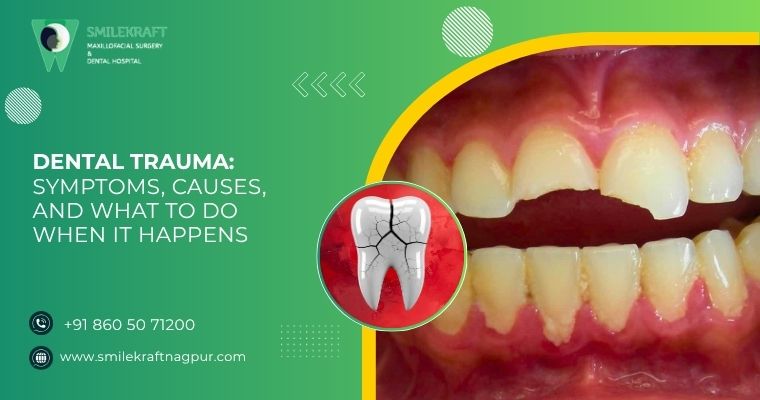
Ask any cricket fan, and they'll tell you: a ball to the face is one of those moments that happens in slow motion. One second you're watching the game, the next someone's on the ground holding their mouth. It doesn't have to be a cricket match, of course. A fall from a bicycle, a collision on the football field, or simply tripping on the stairs can result in the same outcome: a damaged, loosened, or completely knocked-out tooth.
Dental trauma is more common than most people realize, and the first few minutes after it happens matter more than almost anything else. The difference between saving a tooth and losing it permanently can come down to what you do in that window.
This guide walks you through exactly what to do, what the common injury types look like, and when to treat it as a genuine emergency, which, in most cases, is immediately.
The First 30 Minutes: What to Do Before You Reach the Clinic
Before anything else, stay calm. When it comes to dental trauma, panic makes decisions worse, and most tooth injuries are treatable if handled correctly.
If a Tooth Has Been Knocked Out
A knocked out tooth is a dental emergency. Here's what to do, in order:
- Pick the tooth up by the crown, never touch the root
- If it's dirty, rinse it gently with milk or clean water. Do not scrub it
- Try to reinsert it into the socket immediately if possible, and bite down gently on a clean cloth to hold it in place
- If reinsertion isn't possible, store it in milk, saline, or between the cheek and gum, not in water, and never dry
- Get to the nearest dental clinic immediately, ideally within 30 minutes
Tooth avulsion, the complete displacement of a tooth from its socket, has the best outcomes when the tooth is reimplanted within an hour. Every minute counts.
If a Tooth Is Chipped or Cracked
Collect any broken fragments if possible and store them in milk. Rinse your mouth with lukewarm water, apply a cold compress to reduce swelling, and get to a dentist the same day. Even if there's no pain, a crack can extend deeper than it appears.
If a Tooth Is Loose or Displaced
Don't try to reposition it yourself. Bite gently and get to a dentist as soon as possible. Tooth mobility after an impact is a sign of ligament or bone involvement that needs professional assessment.
Common Types of Dental Trauma
Chipped and Fractured Teeth
A chipped tooth repair is one of the most common procedures following accidental tooth damage, and fortunately, one of the more straightforward ones. Minor chips involving only the enamel can often be smoothed or restored with composite bonding in a single visit.
A crown fracture that extends into the dentine causes sensitivity and requires prompt attention. If the fracture reaches the pulp (the inner nerve tissue), pulp infection is a concern, and treatment becomes more involved.
Cracked tooth treatment depends on how deep the crack runs. Superficial cracks are manageable. A crack that extends to the root may require a crown, root canal treatment, or, in severe cases, extraction.
Tooth Fracture and Root Involvement
Tooth fracture management becomes more complex when the root is involved. A root fracture (a crack within the root itself) isn't always visible and is usually diagnosed through X-rays. Depending on the location of the fracture, treatment options range from dental splinting to extraction.
Dental splinting involves bonding the injured tooth to adjacent stable teeth, allowing the supporting structures time to heal. It's commonly used for both root fractures and displaced teeth.
Avulsed Tooth
Avulsed tooth treatment is time-critical. If the tooth is reimplanted successfully and promptly, it may reattach to the supporting bone and ligament over time. After reimplantation, dental splinting is typically used for 2–4 weeks to stabilize the tooth while healing occurs.
Tooth Displacement
Sometimes a tooth doesn't come out completely; it's pushed inward, pulled outward, or shifted to the side. This is called luxation, and it almost always involves ligament damage and sometimes pulp problems. Repositioning and splinting are typically required, followed by monitoring for signs of nerve involvement.
Long-Term Consequences of Ignoring the Injury
This is where many patients make a costly mistake; the immediate pain settles, life gets busy, and the injury gets filed away as "handled." But traumatic tooth injury management doesn't end when the acute pain stops.
Untreated or inadequately treated tooth injuries can lead to:
- Tooth discoloration post-injury: a darkening of the tooth that signals internal bleeding or pulp death
- Dental abscess: an infection at the root tip that develops weeks or months after the original injury, sometimes without obvious symptoms until it becomes serious
- Bite misalignment: a displaced or poorly managed tooth can shift over time, affecting how the teeth come together
- Root resorption: where the body slowly breaks down the tooth root, eventually leading to tooth loss
None of these is inevitable, but they're significantly more likely when dental trauma isn't properly assessed and followed up.
Tooth Injury in Children: What Parents Should Know
Dental injury in children is extremely common; studies suggest that up to 30% of children experience some form of tooth injury before adulthood. Falls are the leading cause of injury in toddlers and young children; sports dental injury becomes more prominent as children get older.
A few things specific to children are worth knowing:
If a milk tooth is knocked out, do not attempt to reimplant it. Reimplanting a primary tooth can damage the developing permanent tooth underneath. Instead, keep the child calm, control any bleeding with gentle pressure, and visit a dentist to assess the area.
If a permanent tooth is knocked out, follow the same steps as for adults. Time is equally critical.
Pediatric dental emergency situations can be frightening for both child and parent. Staying calm and moving quickly, without rushing the child into panic, is the best approach. Most children recover well from tooth injuries when treated promptly.
Sports mouthguard use is one of the most effective ways to prevent sports dental injury in adults and children alike. A custom-fitted one from your dentist offers significantly better protection than over-the-counter options.
When Is It a Dental Emergency?
Treat any tooth injury as an emergency if:
- A permanent tooth has been completely knocked out
- There is significant bleeding that doesn't slow within 10–15 minutes
- There is severe pain, swelling, or signs of infection
- A tooth has been visibly displaced or is extremely loose
- There is dental injury in children
For anything less acute, like a minor chip with no pain, mild sensitivity, same-day or next-day dental emergency care is appropriate. But when in doubt, acting sooner rather than later is wise.
Act Now, Not Later
When it comes to dental trauma, the single most important thing is time. A knocked-out tooth reimplanted within 30 minutes has a dramatically better prognosis than one that has waited two hours. A crack assessed the same day is far easier to manage than one that's been left to extend toward the root.
If you or your child has experienced a tooth injury, whether it happened today or a few weeks ago and was never properly checked, book an emergency consultation at Smilekraft Dental Clinic in Nagpur. Come in, get it assessed, and know exactly where things stand.
Call Smilekraft Dental Clinic today. The sooner you act, the better the outcome.
Frequently Asked Questions
Q1. Can dental trauma be fixed?
In most cases, yes, the extent of recovery depends on the type and severity of the injury, and crucially, how quickly it was treated. A chipped tooth repair is often straightforward. A knocked out tooth reimplanted within the hour has a good chance of survival. Even more complex injuries involving root fracture or pulp damage have treatment pathways. The key is not waiting; outcomes worsen significantly the longer tooth injuries go unassessed.
Q2. What is a traumatic dental injury?
It refers to any sudden physical injury to the teeth, supporting bone, gums, or surrounding soft tissue, typically from a fall, collision, or impact. This includes everything from a minor crown fracture to a complete tooth avulsion. Dental injury in children from falls and sports dental injury from contact activities are the most common causes, though it can happen to anyone at any age.
Q3. When to worry about tooth trauma?
Worry, and act immediately if a permanent tooth has been knocked out, displaced, or is significantly loose. Also seek same-day dental emergency care for severe pain, visible cracking, or any swelling around the jaw or gums. Even seemingly minor injuries like a small chip are worth a prompt check, since what's visible on the surface doesn't always reflect what's happening at the root level.
Q4. Can dental trauma cause nerve damage?
Yes. Pulp damage is a recognized complication of tooth injuries, particularly in fractures that extend deep into the tooth or in cases of severe impact. Signs include persistent pain, tooth discoloration post-injury, or heightened sensitivity that doesn't settle. In some cases, nerve damage develops gradually, which is why follow-up appointments after any tooth injury are important, even when the initial pain has resolved.
Q5. How to recover from dental trauma?
Follow your dentist's post-treatment instructions carefully; this typically includes soft foods, avoiding pressure on the affected tooth, and keeping the area clean. Attend all follow-up appointments, since conditions like dental abscess, tooth discoloration post-injury, or root fracture complications can develop in the weeks after the initial injury. If dental splinting has been placed, avoid anything that puts stress on the splinted teeth until it's removed.