

Choosing between braces and aligners can sometimes feel like choosing between two popular phone models. Both do the job. Both have their own fan following. And both solve the same problem: straightening teeth. The real question is simply which one fits your lifestyle better.
That’s where Invisalign comes in. Over the last few years, many people exploring orthodontic treatments have become curious about invisible aligners and how they compare with traditional braces.
But here’s the thing: this isn’t a battle where one treatment defeats the other. Think of it more like two different routes to the same destination: a healthier, well-aligned smile.
People visiting us say that some prefer the classic reliability of braces. Others love the convenience of invisalign aligners in Nagpur. Both work effectively when planned properly by a dentist.
So instead of a winner vs. loser comparison, let’s break things down in a fun way and see how these two orthodontic treatments differ.
What Exactly Are Invisalign Aligners?
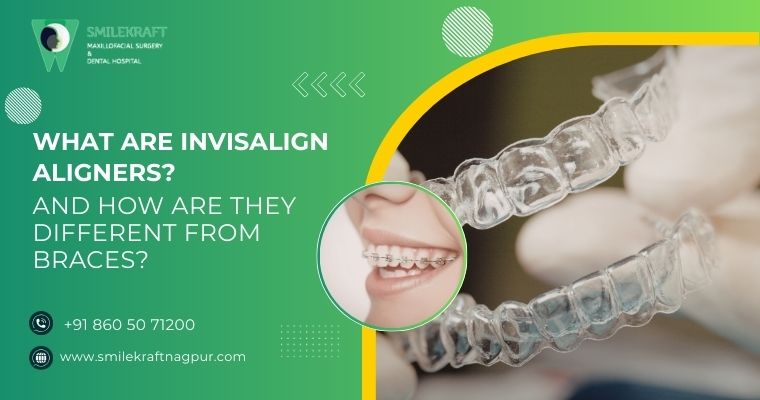
Invisalign aligners are transparent trays that gently move your teeth into better alignment over time.
Each set of aligners is custom-made based on a digital scan of your teeth. You wear them for most of the day, usually about 20–22 hours, and switch to a new set every couple of weeks as your teeth gradually shift.
Because the trays are clear and removable, many people like them for their low visibility and flexibility.
For people considering invisalign aligners in Nagpur, the treatment at Smilekraft Dental Clinic typically starts with a digital scan of the teeth, followed by a step-by-step treatment plan showing how the teeth will move during the process.
Meet the Classic: Traditional Braces
Braces have been around for decades and are still widely used by orthodontists.
They consist of:
- Brackets attached to the teeth
- Wires that connect the brackets
- Small adjustments made by the dentist over time
The brackets and wires gradually guide teeth into the correct position.
Braces are highly effective for a wide range of alignment issues, from mild crowding to more complex bite problems.
So while newer treatments get plenty of attention, braces remain a trusted orthodontic solution.
Braces vs Aligners: Think of Them as Two Different Work Styles
Instead of comparing them like competitors, it’s easier to understand them as two different working styles.
One works continuously and visibly.
The other works quietly and discreetly.
Both are designed to move teeth safely over time.
Difference #1: Visibility
Let’s start with the most obvious difference.
Braces
Traditional braces are visible because the brackets and wires sit on the outside of the teeth.
For some people, especially teenagers, this is completely fine. In fact, braces have become so common that many people barely notice them anymore.
Aligners
Clear aligners are designed to be nearly invisible. Because they are made from transparent material, they blend with the natural color of the teeth.
That’s one reason many adults opting for clear aligners in Nagpur at Smilekraft Dental Clinic consider these as an option.
But again, this is more about personal preference than superiority.
Difference #2: Removability
This is where things start to feel quite different.
Braces
Braces stay fixed on the teeth throughout treatment. They can only be removed by the dentist.
This means they’re working 24/7, whether you remember them or not.
Aligners
Aligners are removable. You can take them out while:
- Eating
- Drinking anything other than water
- Brushing and flossing
While this flexibility is convenient, it also means you need to remember to wear them consistently for them to work effectively.
So one treatment relies on fixed consistency, while the other depends on patient discipline.
Difference #3: Food Restrictions
If food is a big part of your daily joy (which, honestly, it is for many people), this difference can matter.
Braces
Certain foods can damage braces, so dentists usually recommend avoiding things like:
- Sticky candies
- Hard nuts
- Very crunchy snacks
These foods can loosen brackets or bend wires.
Aligners
With aligners, you simply remove the trays before eating. That means you can generally enjoy your normal meals without worrying about damaging the appliance.
Of course, good oral hygiene still matters after meals, before putting the aligners back.
Difference #4: Cleaning and Maintenance
Both treatments require proper care, but the routines look slightly different.
Braces
Cleaning around brackets and wires requires a little extra effort. Dentists often recommend:
- Special orthodontic toothbrushes
- Interdental brushes
- Floss threaders
It takes practice, but most people get used to the routine quickly.
Aligners
Aligners are cleaned separately. You brush your teeth normally and then rinse or gently clean the aligner trays before wearing them again.
Many patients who have opted for invisalign aligners in Nagpur at Smilekraft Dental Clinic say that they appreciate that brushing and flossing remain similar to their usual routine.
Difference #5: Dental Visits
Both treatments involve regular check-ups.
Braces
Dentists adjust the wires periodically to guide tooth movement.
Aligners
Instead of adjustments, you receive a series of aligner trays and switch them according to the treatment schedule.
You’ll still visit the dentist to monitor progress and make sure everything is moving as planned.
At Smilekraft Dental Clinic in Nagpur, treatment plans for both braces and aligners are customized based on each patient’s needs.
Difference #6: Treatment Time
The duration of orthodontic treatment varies depending on how complex the alignment issue is.
Some cases may take around 12 months, while others could take longer.
Both braces and clear aligners in Nagpur can achieve excellent results when the treatment plan is followed carefully.
What matters most isn’t the appliance itself but the consistency of the treatment process.
So… Which One Is Better?
The honest answer? Neither is universally better.
Braces and aligners are simply different tools for achieving the same goal: a healthy, well-aligned smile.
The right option depends on:
- The type of alignment issue
- Lifestyle preferences
- Age and daily routine
- Dentist’s recommendation
That’s why a proper consultation matters. A dentist evaluates your teeth, bite, and overall dental health before recommending the most suitable approach.
FAQs
Q1. How much do invisible aligners cost in Nagpur?
The cost of invisible aligners in Nagpur can vary depending on the complexity of the alignment issue and the duration of the treatment. Mild cases may require fewer aligners and therefore cost less, while more complex corrections may involve a longer treatment plan. During a consultation, the dentist evaluates your teeth and provides a detailed estimate based on your specific needs.
Q2. Is Invisalign 100% effective?
Invisalign can be very effective for many types of orthodontic problems, including mild to moderate crowding, gaps, and alignment issues. However, its success depends on proper treatment planning and patient compliance. Since aligners are removable, wearing them for the recommended 20–22 hours per day is essential for achieving the desired results.
Q3. Are Invisalign aligners painful?
Most patients experience mild pressure or slight discomfort when switching to a new set of aligners. This sensation usually lasts for a day or two and is a sign that the teeth are gradually moving. Compared to traditional braces, many people find aligners more comfortable because there are no wires or brackets rubbing against the mouth.
A Straighter Smile Starts With the Right Conversation
Orthodontic treatment has evolved a lot over the years. Today, patients have more choices than ever before, which is always a good thing.
Whether someone prefers the reliability of braces or the flexibility of invisalign aligners, both treatments can guide teeth into better alignment when planned properly.
If you’re curious about which option might work for you, whether braces or invisalign aligners in Nagpur, a consultation at Smilekraft Dental Clinic can help you understand the possibilities without any pressure.
Because sometimes the first step toward a better smile isn’t choosing a treatment; it’s simply asking the right questions.